Do you know a college student who is interested in science or agriculture, but needs more experience before starting their career? Tell them about the USDA-NIFA funded Research and Extension Experiences for Undergraduates (REEU) Internship at the West TN AgResearch and Education Center in Jackson, TN. Continue reading
Category Archives: Cotton
Wheat cold tolerance info after the 4/15 frost/freeze
Instead of checking the thermometer last Wednesday morning (4/15) to find temperatures at or around 32 degrees, many found temperatures as low as 28 degrees. By now (over seven days after the lowest nighttime temperature observed 4/15), we can inspect the wheat crop and get a decent estimate of what (if any) damage occurred. Before we get into damage assessments, though, I think it is appropriate to take a look at how cold it got in order to get an idea of the expected level of damage.
Does boron fertilizer use increase corn and soybean yields?
Boron is associated with cell wall biosynthesis, cell wall structure, membrane function, pollen germination, pollen tube growth, and carbohydrate metabolism; hence, insufficient supply can severely impair crop performance, and ultimately result in sub-optimal yields.
Boron deficiency symptoms vary among crops, but, are often noticed on the youngest leaves or terminal buds since boron is not very mobile within the plant. In some crops, deficiency symptoms appear as misshaped leaf blades (Fig. 1). Failure of seed and fruit set has been observed on boron deficient soils (Fig. 2). Deficiency in boron during flowering and fruit may reduce the retention of bud flowers and developing fruits. Some boron deficient crops tend to have short internodes and swollen nodes giving the crops a bush appearance.
Poa and Ryegrass Causing Burndown Issues
Poor control of poa (annual bluegrass) and ryegrass have been the common calls of late. This is becoming more common every spring. It would appear that an increasing portion of the poa and ryegrass populations in Tennessee has evolved some level (2 to 4x) of glyphosate resistance.

Thinking About Insect Pests During Planting Season

There are some basic management practices that can affect, sometimes worsen, and other times be used to reduce risks of insect pest injury. Below, I’ve included some observations and suggestions for your consideration.
As a general rule of thumb (but not universally true), no-till production increases the risk of some problems including pests like cutworm, threecornered alfalfa hopper, slugs, and several below ground pests (e.g., wireworms and white grubs). Of course, tillage is not an option in most areas of Tennessee. Thus, most entomologists suggest Continue reading
Wheat questions on the first of April
**Posted on behalf of Lindsay Stephenson, Haywood County Extension Agent**

As the warmer spring days approach, and hopefully some drier days ahead, planning your next steps on your wheat crop is probably on your to-do list. I spent some time earlier this week reaching out to Extension Agents and Specialists to get their opinions on some commonly asked questions. Below are answers to those questions to help you in your decisions about your wheat.
Correlation between Stock Markets and Cotton Futures
*Posted on behalf of Dr. Aaron Smith. A pdf of this article can be accessed by clicking the title below*
Correlation between Stock Markets and Cotton Futures
By Dr. Aaron Smith, Associate Professor and Charles Martinez, Assistant Professor
Department of Agricultural and Resource Economics, University of Tennessee
Since mid-February, cotton and stock markets have plummeted due to the spread of the COVID-19 virus. The COVID-19 pandemic has reverberated through all sectors of the US and global economies. Probably the most effected of the agricultural commodities is cotton. Cotton is tied closely to global economic activity as, in general, clothing and other apparel purchases are not a necessity and can be delayed, unlike food. For this reason, there is a close correlation between stock markets, such as the S&P 500, and cotton futures (Figure 1). Continue reading
Results of the 2019 Palmer amaranth Dicamba Screen

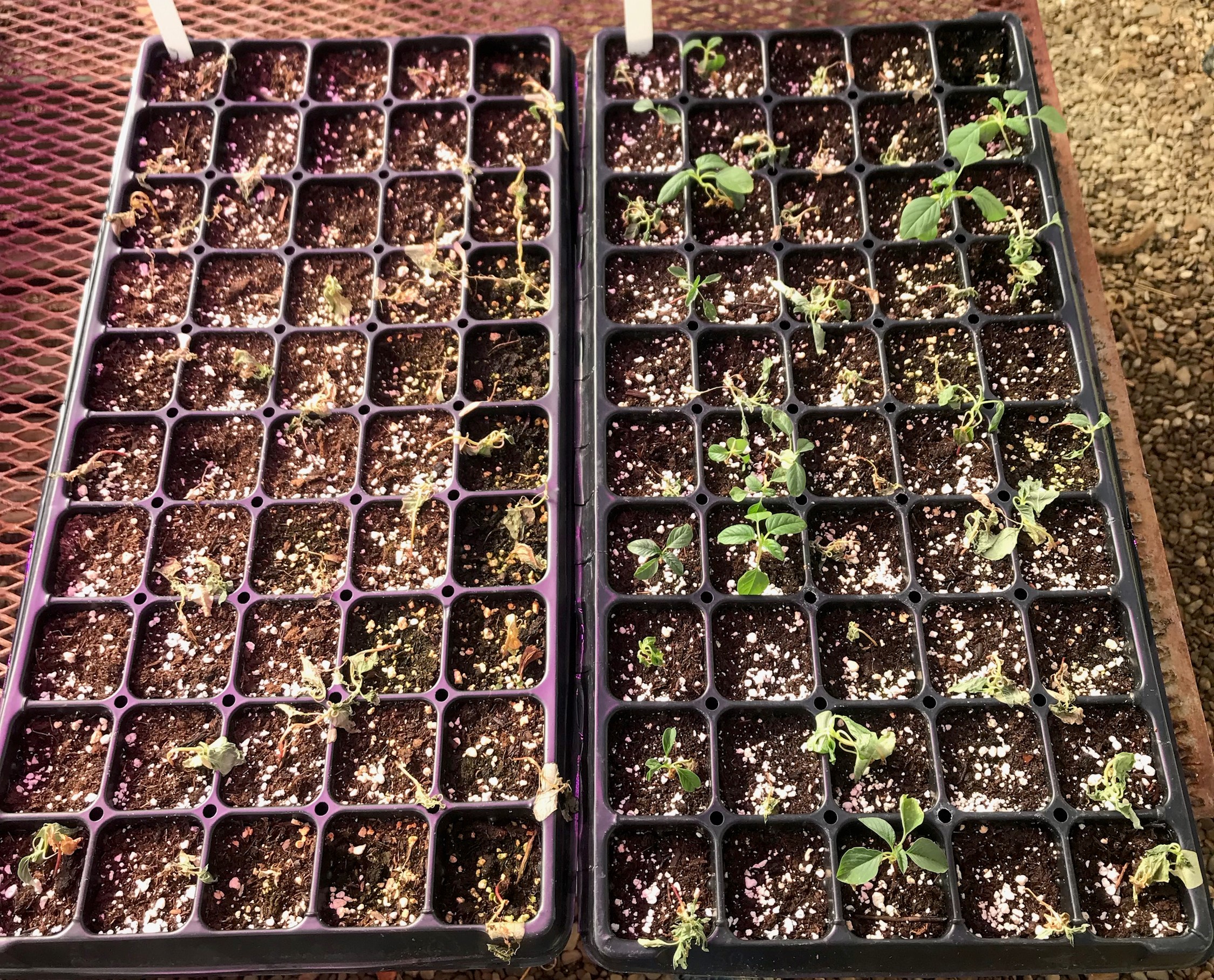
In 2019 we ran calls on about 40 fields where producers were disappointed with their Palmer amaranth control from applications of Engenia or XtendiMax. We collected Palmer amaranth seed last fall from 22 of these fields where it looked like the Palmer had survived timely application(s) of dicamba. Subsequently, we were able to get a critical mass of seed to germinate from 12 of these collections in order to evaluate plants for possible dicamba tolerance in three separate greenhouse screens conducted throughout the winter months. Continue reading