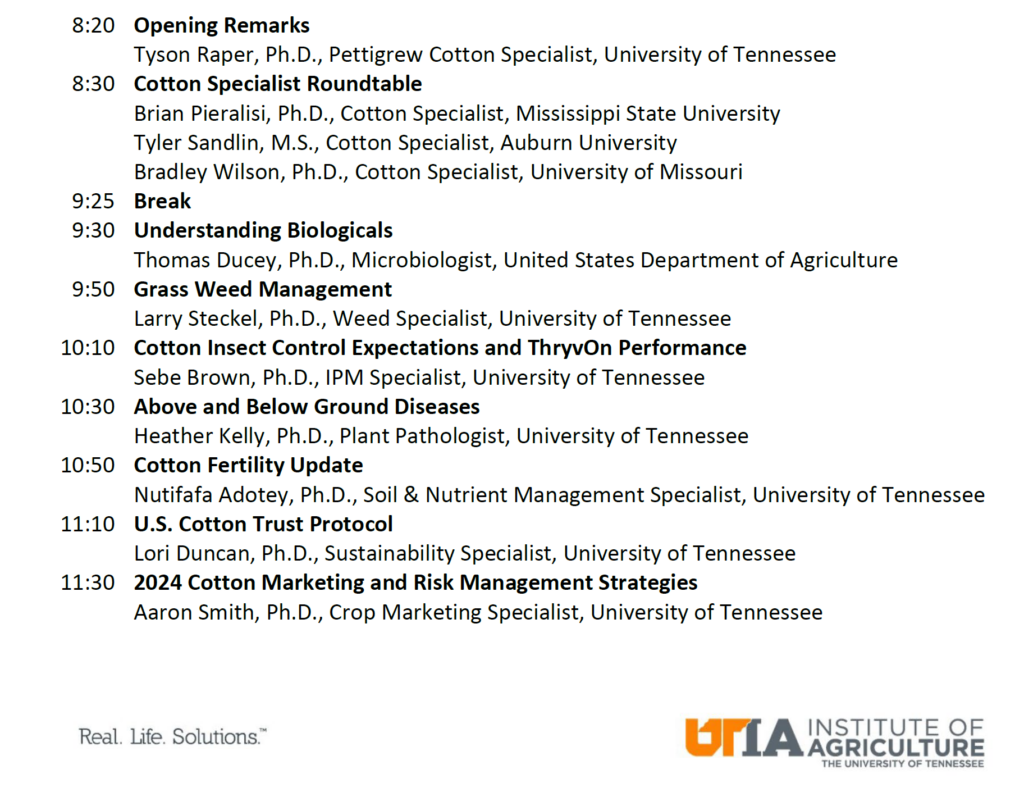
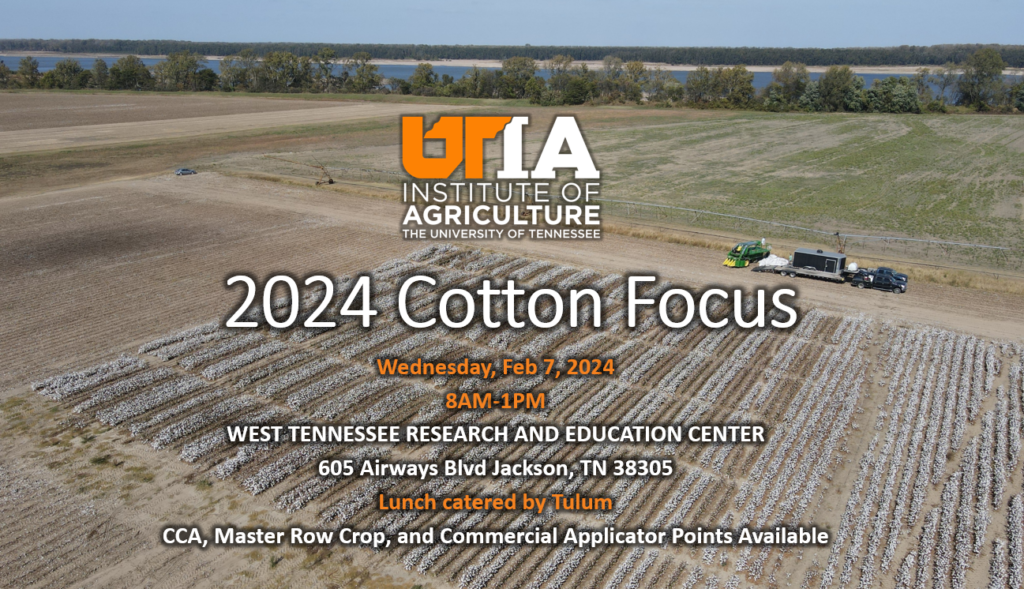
 I am happy to report the agenda for the 2024 Cotton Focus has been set and we have a very informative lineup. We will start the morning out with a Cotton Specialist Roundtable with Dr. Brian Pieralisi (MS), Mr. Tyler Sandlin (AL), and Dr. Bradley Wilson (MO) discussing their season observations, tips for 2024, and things they will be watching over the coming year. Next, we will have Dr. Thomas Ducey with USDA from Florence, SC discussing the emerging field of Biologicals- you will not want to miss his section! Our late morning section will include the always valuable updates from Dr. Lori Duncan, Dr. Aaron Smith, Dr. Sebe Brown, Dr. Larry Steckel, Dr. Nutifafa Adotey and Dr. Heather Kelly. Finally, we will close out the meeting with a catered lunch from Tulum. Pesticide and CCA points will be available. Looking forward to seeing each of you there!