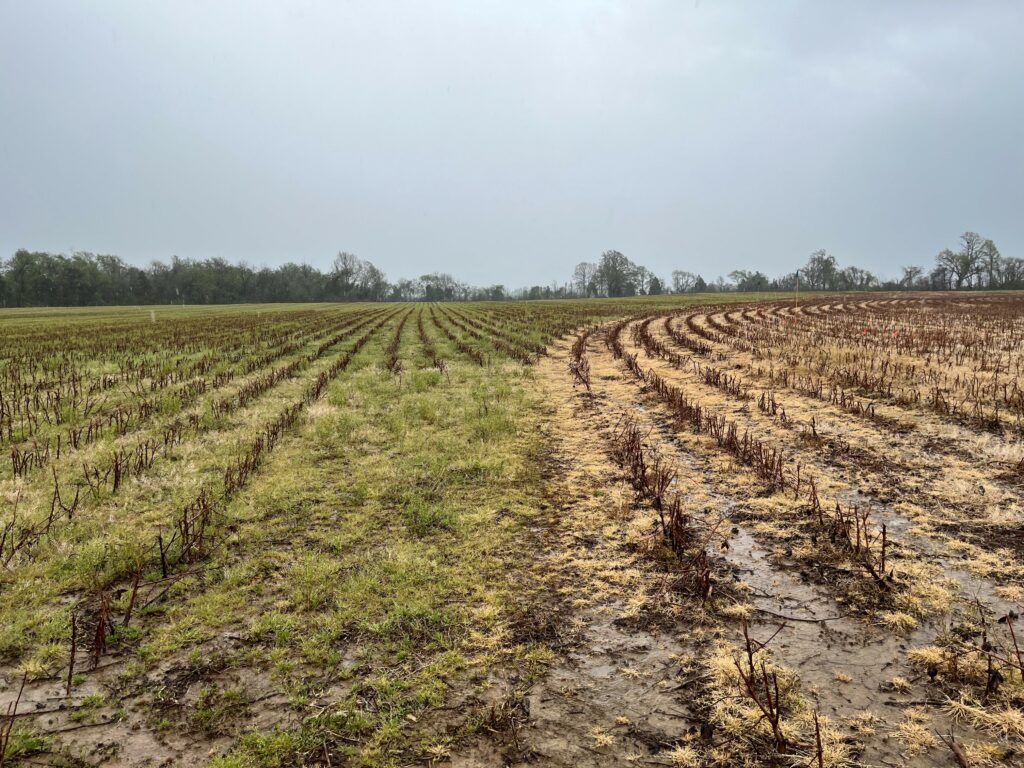
Picture 1. Left Untreated – Right 40 ozs Roundup Power Max 3 Applied March 17, 2023
We have had the opportunity to observe field and demo burndowns around West Tennessee. In general, going back “old school” and applying glyphosate alone provided very effective burndown. This includes applications made back in mid-March when night time temperatures were below freezing (Picture 1). Continue reading →
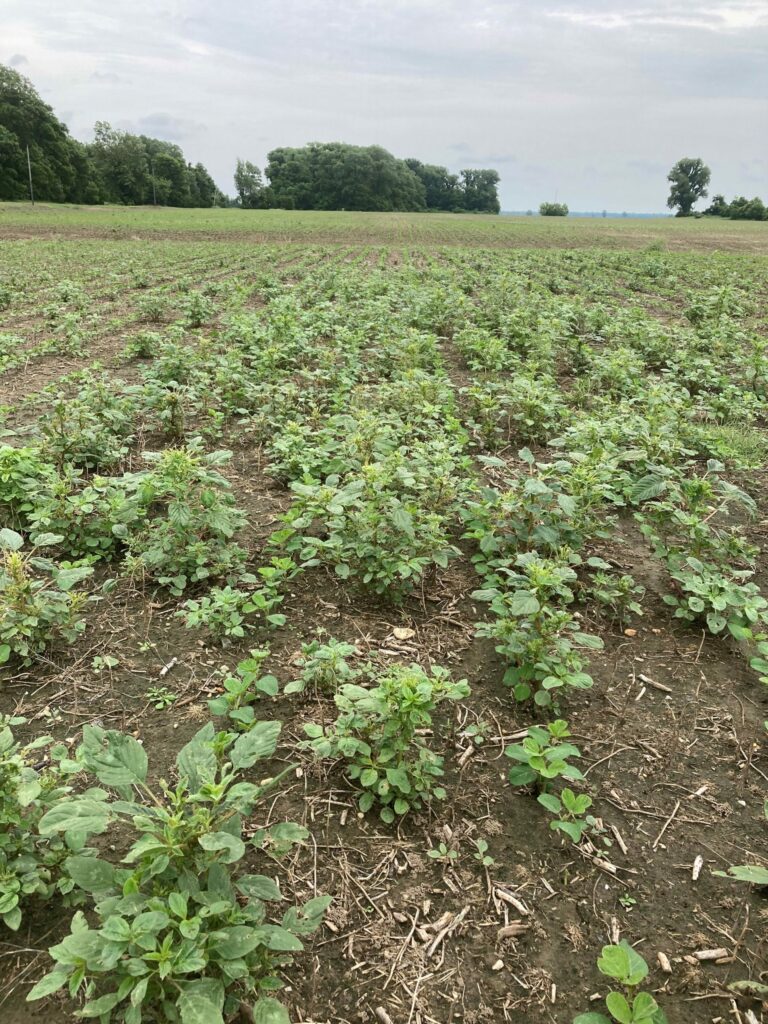
2022 Palmer amaranth escape Engenia + glyphoste PRE/ followed by Engenia + Glyphosate applied POST. (Picture 1)
Increase in input costs and lower relative commodity prices compared to last year may tempt some to forgo using a PRE this spring. Since glyphosate and dicamba have actually gone down in price, it may be tempting to try this combination near planting, then hope that dicamba will provide enough residual weed control to hold until those herbicides can be applied again early POST. Continue reading →
S. Aaron Smith, Associate Professor and Extension Crop Marketing Specialist
Beck Bowling, Extension Specialist
Department of Agricultural and Resource Economics
University of Tennessee
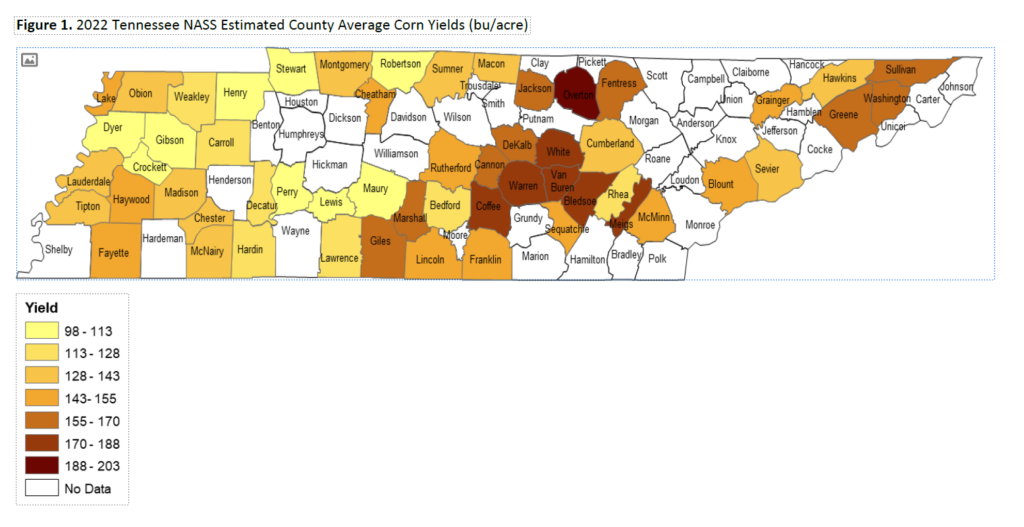
Below is a summary of USDA NASS Estimated County Yields for Tennessee. Data is displayed for all available counties as of March 28, 2023. Additional data can be found at:
https://quickstats.nass.usda.gov/
To view this article in PDF form with all attached figures, please click the image above. Continue reading →
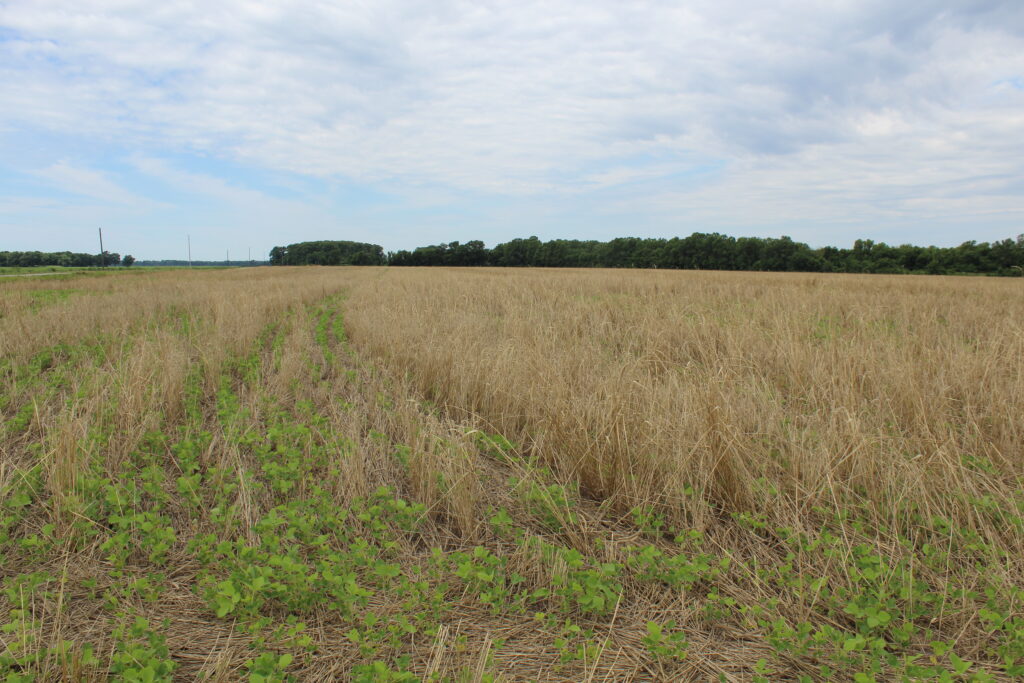
It is cover crop burndown time. There is no one size fits all recommendation for cover crop control. It really depends on the environment and the cover crop species in the field. With respect to environment, cover crop burndown can be tricky during periods of long stretches of saturated soil conditions. This is particularly true with systemic herbicides where translocation of those herbicides to growing points can become limited. Continue reading →
As general rule, no-till production increases the risks from pests including slugs, cutworm, threecornered alfalfa hopper and several below ground pests such as wireworm and southern corn rootworm. Tillage is not an option in most of Tennessee’s agricultural landscape. This leads entomologists to recommend spring “burndown” applications 4 weeks in advance of planting. The goal is to “break the green bridge” or eliminate alternative hosts (weeds, cover crops) well before planting the cash crop.
However, making burndown applications 4 weeks prior to planting isn’t always possible or it doesn’t align with the goals of having cover crops. One way to help mitigate potential insect issues in late burndown is to add a pyrethroid insecticide with your herbicide application or within 7 days of planting. Beware blooming and pollinator attractive cover crops (vetch, brassica species) may have foraging honey bees and pyrethroids should not be utilized until the plants are not longer attractive to pollinators (desiccated or senescing from herbicides).
Utilizing insecticide seed treatments will offer protection against pest insects that may feed on your cash crop. If you are planting green (not burning down cover crops until after planting) I highly recommend a robust insecticide seed treatment and a pyrethroid insecticide that is included with the burndown herbicide. In corn this would be Poncho 500 or 1250, in soybeans Gaucho or Cruiser treated seed and in cotton Gaucho or Aeris based treatments will offer adequate protection from most below ground and some above ground pests. Keep in mind, seed treatment residual activity is strongly influenced by environmental factors, plant growth and amount of AI on the seed.
Cutworm and cut corn plant
Cutworms in corn and cotton are uncommon but can be a serious pest. Pyrethroid applications within a week of planting will significantly reduce the risks of cutworm issues at low cost. Insecticide seed treatments are normally not enough to control cutworms and Bt traits in corn and cotton can offer mixed results depending on the traits. Three gene corn and cotton (those that include the Vip trait) provide better cutworm control than dual gene corn and cotton (V2TP, BG2 etc).
Overall, I like to see farmers planting in grave yard dead fields of weeds or cover crops but that isn’t always the case. Providing protection for your cash crop, at a relatively low expense, may help avoid the painful and costly decision to replant.
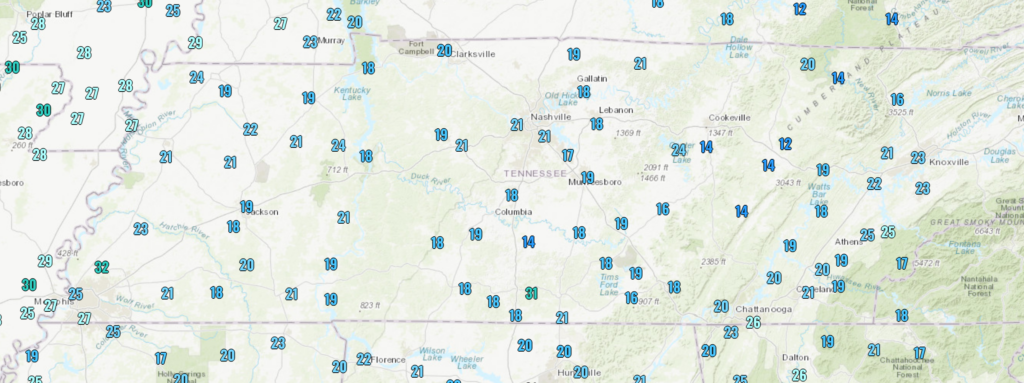
The front which moved through this past weekend (3/18-3/20) brought low temperatures down within a few degrees of records set back in 1965. Based on the growth stage and temperatures observed, I believe we will see damage in some of our wheat. In this blog article, I cover basic information on the conditions that led to the injury and how best to assess the level of injury in your wheat crop following a freeze near jointing. Continue reading →
Cotton Focus will be held Wednesday, Feb. 8th, at the West Tennessee Research and Education Center (605 Airways Blvd, Jackson, TN 38301). The agenda has been finalized and we are very excited about our speaker line-up. Points will be provided and the event will conclude with lunch from Tulum.
Additionally, the annual meeting of the Tennessee Boll Weevil Eradication Foundation (TBWEF) will be held after lunch in Room 127 of the West Tennessee Ag Research & Education Center at Jackson. All producers are invited to attend.
We invite you to participate in a study conducted by University of Tennessee Institute of Agriculture researchers along with the Tennessee Department of Agriculture. The purpose of this survey is to demonstrate the progress Tennessee farmers are making towards environmental stewardship.
The survey should take about 10 minutes to complete. Your participation is voluntary. NO personal information or data will be collected.