Avat Shekoofa, Ph.D., Assistant Professor, Crop Physiologist – Water Stress & Irrigation


Avat Shekoofa, Ph.D., Assistant Professor, Crop Physiologist – Water Stress & Irrigation
Due to little time and very few good spray days some corn fields have yet to have their lay-by application. Corn is putting on a new leaf every 3 days with all the heat and water. Therefore time is short before it will be too mature to apply any herbicide safely over the top.
The most asked question “is how large can corn be before glyphosate could potentially cause injury”? The glyphosate label states it can be applied up through the V8 corn growth stage. My experience has been if glyphosate is applied to corn larger than that it can at times cause ears to be barren. This phenomena is difficult to predict ahead of time as it can vary due to maturity of the corn at application, hybrid and weather. Continue reading
Posted for Dr. Aaron Smith, Associate Professor and Extension Economist, Department of Agricultural and Resource Economics, University of Tennessee Institute of Agriculture
The USDA has started accepting applications for CFAP payments to producers that have been adversely affected by the COVID-19 pandemic. Continue reading
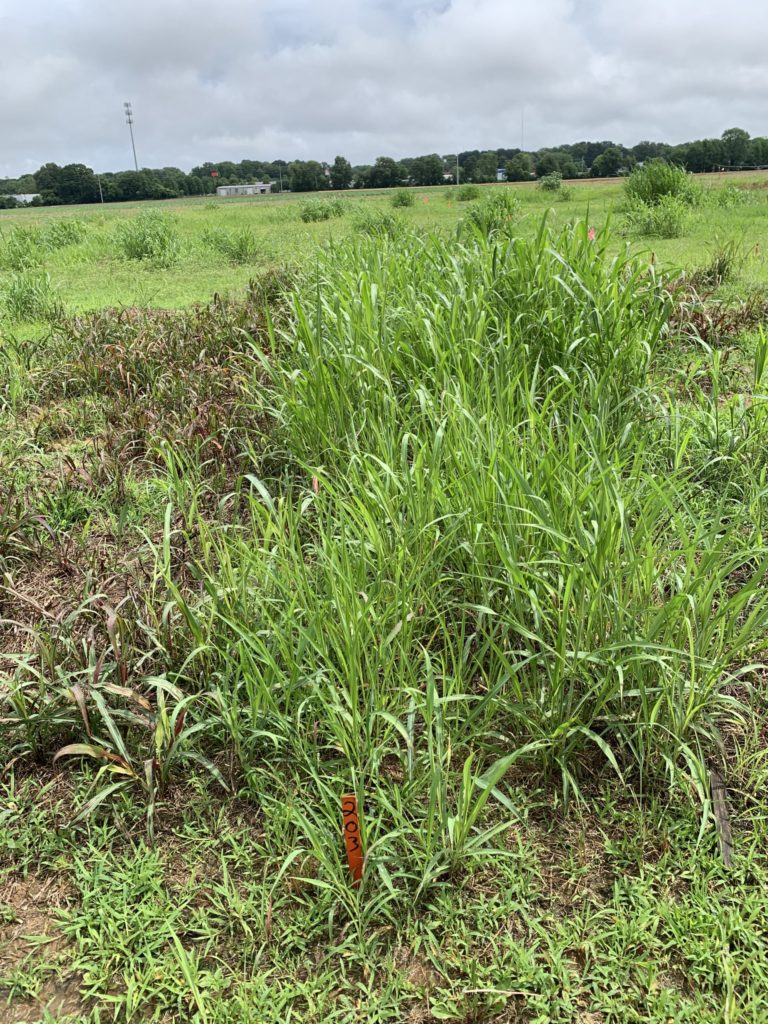
Glyphosate is no longer an effective Johnsongrass herbicide in Shelby and Tipton counties. This problem appears to have spread, as field observations as well as follow-up research over the past 2 years would indicate that glyphosate is no longer effective on Johnsongrass in a few fields in Crockett, Fayette, Madison, Haywood and Lauderdale counties. Only the counties near the Kentucky line seem to be getting adequate control of Johnsongrass with glyphosate in most every field. Continue reading

A reminder that moth trapping data are updated weekly at http://www.utcrops.com/BlogStuff/2020MothTrappingData.pdf, and you can also access these data on the Quick Links of this site. Pheromone-baited traps are run for corn earworm (bollworm), tobacco budworm, and southwestern corn borer.
Currently, moth trap catches are generally low, as typically observed this time of year.
This spring has been a roller coaster for sure with respect to planting. Continue reading

This article is a reminder about some critters we need to watch for in the coming few weeks. It’s easy to let something slip through the cracks when you are distracted with planting operations. Try to circle back to emerging fields as best you’re able during the first 2-3 weeks after planting to check on plant stands and other issues.
Wheat – True armyworm is the insect most likely to cause issues at this time of year. Even so, it doesn’t commonly require treatment. However, excessive defoliation before the dough stage can reduce yields, and this pest is easily controlled with pyrethroid insecticides. The treatment threshold is 6-8 larvae per square foot while wheat is still in the milk stage. You can read more about true armyworms at Continue reading
Judging from recent conversations there will be a significant number of corn acres that will need to be replanted. The long cold and wet spell apparently has greatly hindered getting a good stand in some corn fields. Fortunately, there are several options to control a thin corn stand and replant back to corn.
The options, like Select Max, need a waiting period before it can be planted back to corn. Others, like tankmixes of paraquat plus atrazine, allow corn to be replanted right away. Please find attached the results of a study Angela McClure and I conducted on destroying freeze damaged corn and replanting back to corn. We repeated the study the following year on a good stand of corn and got similar results. In this publication (Replanting corn in a failed corn stand) you will find a number of different herbicide options that did a good job controlling an unwanted stand of corn.
Many over the past decade have used the recommendations to satisfactory results. The most consistent time to control an old corn stand is around the V2 corn growth stage, which was the timing the research was conducted. Our experience has been over the years that once the old corn stand matures past V2, results from the herbicides in the publication will likely be more sketchy. In those cases, consider using higher rates of the herbicides in the publication to improve the chance for good control.