Corn: Corn prices have closed higher for the past five trading days. It would appear that the market is trying to shake off the news from the latest USDA planting intention report. Corn futures have regained approximately 50% of what was lost on the report day, which was March 31. This week’s export report indicated that corn shipments increased for the week. Continue reading

Category Archives: Cotton
Crop Progress – Tennessee
RAIN AND COOLER TEMPERATURES SLOW PLANTING
Rains, sometimes heavy, arrived mid-week, curtailing most fieldwork. Up to that point, though, corn producers had made excellent planting progress. Wheat condition remained good to excellent. There were 3.7 days suitable for field work. Topsoil moisture was 3 percent short, 70 percent adequate and 27 percent surplus. Subsoil moisture levels were 3 percent short, 72 percent adequate, and 25 percent surplus. Continue reading at TN_04_04_16.
Crop Progress – U.S.
The Crop Progress reports by NASS have started back. Continue reading at CropProg-04-05-2016.
Tarnished plant bugs get an early start
Tarnished plant bugs are the #1 insect pest of cotton in Tennessee. In the fall of the year, tarnished plant bug (TPB) nymphs develop into adults on weedy hosts in response to decreasing day lengths (Snodgrass 2014). Continue reading
March 1 Planting Intentions
Released: March 31, 2016
March 1 Planting Intentions
Farmers in Tennessee intend to plant 840,000 acres of corn, 60,000 higher than 2015. U.S. corn growers intend to plant 93.6 million acres for all purposes in 2016, up 6 percent from last year and 3 percent higher than 2014. Continue reading at MarchPP16_TN.
Increasing water use efficiency/drought tolerance and yields with cover crops
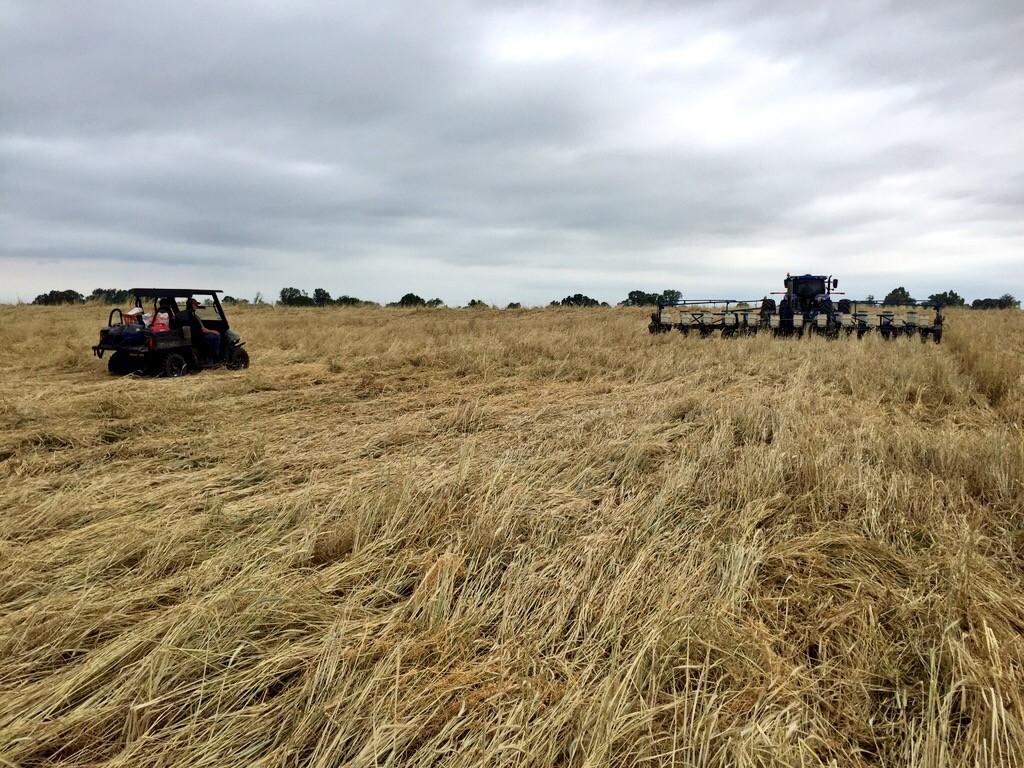
Increased infiltration rates, increased soil water retention, and decreased rates of erosion are frequently mentioned as benefits of integrating a cover crop into a production system. In order to test these proposed benefits, a site was selected early in 2015 to compare a wheat cover crop versus fallow management Continue reading
A few thoughts on incorporating/managing cover crops
Cover crop questions have begun to pick up in recent weeks. Many of these have stemmed around termination timing and method to maximize the benefit of the cover crop while minimizing the potential negative impacts associated with the cover on the following cash crop. I’ve got good and bad news for you. . .
When should I terminate my cover crop?
As planting nears, people are beginning to decide how and when to terminate their cover crop. Cover crops are utilized for many reasons. However with respect to weed suppression, cover crops should be managed “crop specifically”, not unlike how we think of PRE herbicides. Factors that go into this decision will include cover crop specie(s), what the following crop is, and the size/stage of the cover crop.