Category Archives: Soybean

Alerts for Soybean Insect Pests

Green stink bug on a leafStink Bugs.  Very few fields are at R2 and R3 at this time, but stink bugs are concentrated is some of these early fields.  We’ve been doing scout schools this week, and most of what I’ve been seeing is adult green stink bugs.  This is the most common species in Tennessee.  Normally, stink bug populations start building in earnest until R4 and R5.  However, they sometimes concentrate in a few fields that are ultra early compared with the remainder of the crop.  Treat anytime between R1-R7 when stink bug numbers average 36 or more per 100 sweeps. Continue reading →


Soybean field with healthy and diseased plants.

Not Enough Sprayers

Author:  Comments Off on Not Enough Sprayers
 
Soybean field with healthy and diseased plants.
Ignite over the top followed a day later with Gramoxone Inteon + Valor

It is apparent that we do not have the sprayer power in the state to keep up with all the demand.  Most of the pre applied herbicides in cotton and soybeans have played out and folks are scrambling to treat these fields for Palmer pigweed while at the same time trying to keep plant bugs beat back.  In some cases, they can tankmix an insecticide with the herbicide in cotton but often the timing does not work out. Most cotton fields have seen one to two Ignite applications applied over the top.  There have been some reports of Continue reading →


Cotton field with tall grass and broad leaves.

Monitor for Glyphosate-Resistant Goosegrass

Author:  Comments Off on Monitor for Glyphosate-Resistant Goosegrass
 
Cotton field with tall grass and broad leaves.
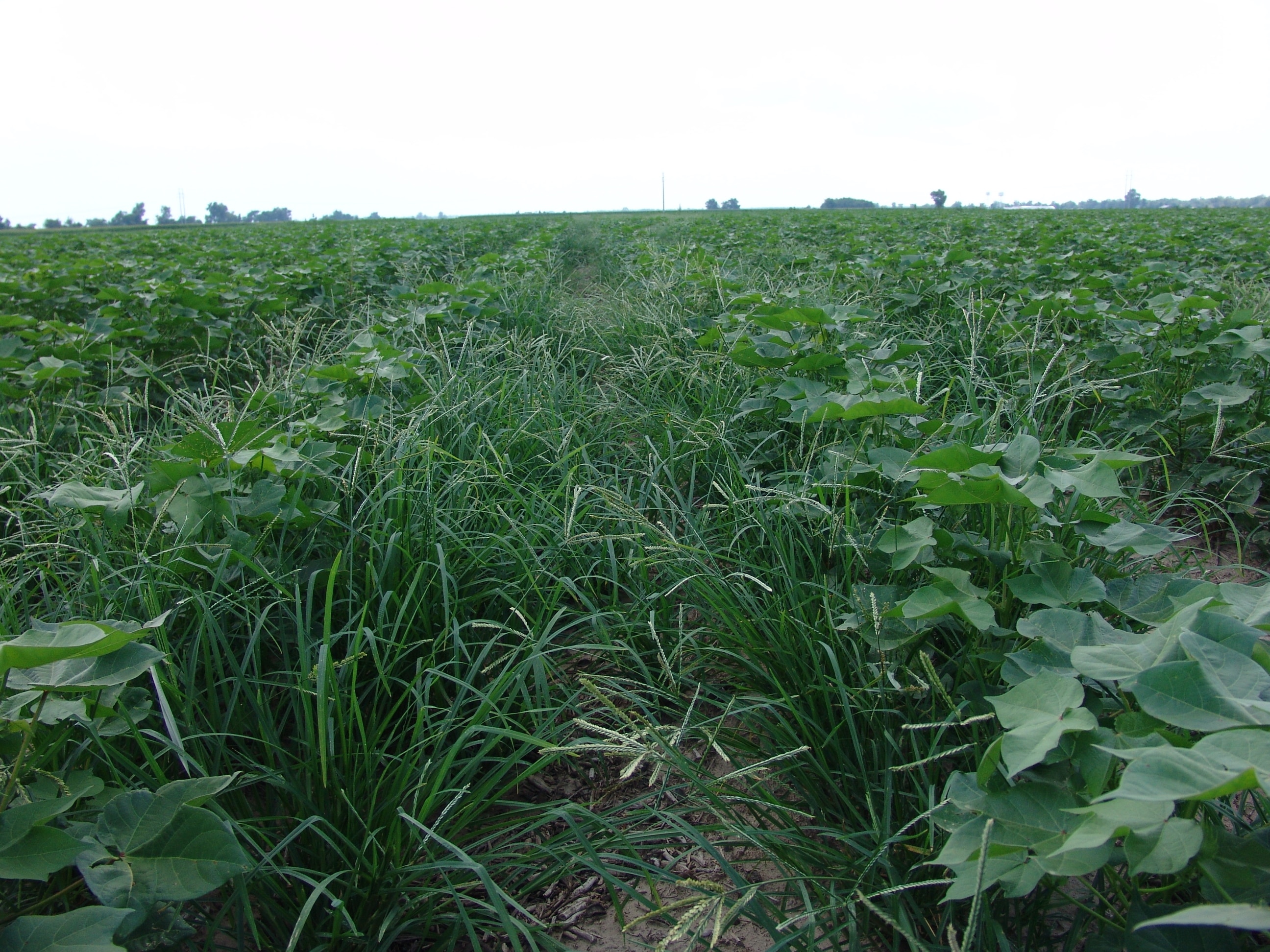
Glyphosate-Resistant Goosegrass after two 22 oz/A applications of Roundup PowerMax

Glyphosate-resistant (GR) goosegrass has shown up in a couple cotton fields in Lake and Dyer counties (picture left).  In these fields, repeated applications of glyphosate failed to control the goosegrass. Unfortunately, by the time the grower realizes that the grass is glyphosate resistant it has 4 or more tillers and is too large for even an application of Select Max or Fusilade to control.  Back in the late 1980s, Select Max or Fusilade did not control large goosegrass.  This appears to Continue reading →


Crop Watch

As reported by NASS on July 5, 2011

CROPS IN GOOD SHAPE ENTERING MONTH OF JULY.  Last week’s mix of scattered rain and sunshine left most of Tennessee’s crops rated in good condition. The corn crop, in particular, has thrived so far this season, with over a quarter of the crop in excellent condition. Most areas received sufficient rain to keep soil moisture levels healthy while still providing farmers with enough dry days to conduct fieldwork. Wheat harvest and soybean planting were virtually complete across the state by week’s end. Continue reading →


Soybean Insect Update

Author:  Comments Off on Soybean Insect Update

There have been several more reports of threecornered alfalfa hopper (TCAH) infestations in seedling soybean where a high percentage of plants have been girdled.  Plants less than 10 inches tall are susceptible to girdling.  The girdling will not directly cause yield loss unless plants lodge.  Lodging often occurs later in the season and especially where stands are thin.  Please refer to my previous blog article about TCAH. Continue reading →


Crop Watch

As reported by NASS on June 27, 2011

GOOD WEATHER CONTINUES FOR TENNESSEE’S CROPS

Tennessee farmers received another week of favorable weather for crop growth. Scattered thunderstorms moved across the state and most areas recorded some amount of measurable precipitation. Several weeks of normal to above-average rainfall have replenished soil moisture levels. However, there were still enough dry days last week for farmers across the state to make some progress wrapping up wheat harvest, hay cutting, and soybean planting. As of the end of last week, Tennessee’s corn, cotton, soybean and tobacco crops were all rated in mostly good condition. Continue reading →


Crop Watch

As reported by NASS on June 20, 2011

RAIN ARRIVES AS WHEAT HARVEST PROGRESSES.  A slow-moving front dropped precipitation across most of Tennessee last week, creating improved conditions for spring-planted crops. Normal temperatures coupled with rains provided a welcome relief for farmers concerned about the effect of hot and dry weather earlier this month. In between rains, farmers were busy harvesting Continue reading →


Lush green field with young crops and weeds.

Monitor Soybean Fields for Newly Emerged Palmer

Author:  Comments Off on Monitor Soybean Fields for Newly Emerged Palmer
 
Lush green field with young crops and weeds.
Palmer amaranth take over a soybean field after 32 ozs of Roundup PowerMax followed a week later with 1.5 pts of Reflex + MSO

“These pigweed are kicking our #&^”….. That quote one county agent said to me the other day fully defines the weed issues in many soybean and cotton fields.  A number of soybean fields that did not have a Pre applied herbicide have become partially or completely over run with Palmer amaranth (Picture left) last week.  Some of these fields will be destroyed this week and Continue reading →