Category Archives: Cotton

Crop Watch

As reported by NASS on July 25, 2011

SHOWERS PROVIDE SOME RELIEF; MORE RAIN IS NEEDED IN MOST AREAS

A high pressure system positioned over Tennessee prevented widespread rainfall this week; however, crops received some relief from afternoon and evening rainfall. Crops remain in mostly good condition, especially for late July. Crops were beginning to show stress at week’s end from the extreme temperatures and inadequate moisture. Soybeans are blooming and setting pods at a pace about a week to ten days behind the five-year average. Cotton is setting bolls at a pace almost a week behind the five-year average. Continue reading →


Green bug nymph on white flower petal.

Cotton – Crunch Time

Author:  Comments Off on Cotton – Crunch Time

Green bug nymph on white flower petal.Plant bug, stink bugs and bollworm infestations often start peaking about the same time every year.  The last 10 days of July and the first 10 days of August is a critical window.  The reality is that these pests really tend to occur at their highest numbers beginning about 3-4 weeks after first bloom, so the crunch time will vary depending upon the maturity of your crop.  We currently are in an insect lull in many areas, but intensive scouting will be required for Continue reading →


Mid-South Ag Finance Conference to focus on economic conditions, credit risk, farm profitability, government policy

Author:  Comments Off on Mid-South Ag Finance Conference to focus on economic conditions, credit risk, farm profitability, government policy

Dr. David Kohl, internationally known speaker to farmers, ag lenders, small business owners and agribusiness audiences, will be the featured presenter at the 10th annual Mid-South Agricultural Finance Conference. The conference will be held in Boling University Center at the University of Tennessee at Martin from 8 a.m.-3 p.m., Aug. 3. Continue reading →


Crop Watch

As reported by NASS on July 18, 2011

HIGH TEMPS PERSIST ACROSS TENNESSEE.  Above normal temperatures and variable precipitation headlined the state’s weather last week. Scattered showers were reported in areas across the state; however, there were reports of crops showing signs of heat stress in some areas. Soybean growers were busy this week making post emergence and fungicide applications. Continue reading →


Green insect on a leaf close-up

Sampling for Plant Bugs and Stink Bugs

Author:  Comments Off on Sampling for Plant Bugs and Stink Bugs

Green insect on a leaf close-upReports indicate that plant bug pressure has subsided somewhat, although nymphs are becoming more common.  Earlier cotton is being treated for stink bugs in some places, but we generally seem to be in a little lull that is common in Tennessee around first bloom.  The treatment threshold for tarnished plant bug and stink bugs is 3 and 1 bug(s) per drop cloth, respectively, once blooming begins.  We’ve tested sampling approaches and treatment thresholds for plant bugs extensively throughout the Midsouth.  There are several publications summarizing these results (see links below).   Continue reading →


Soybean field with healthy and diseased plants.

Not Enough Sprayers

Author:  Comments Off on Not Enough Sprayers
 
Soybean field with healthy and diseased plants.
Ignite over the top followed a day later with Gramoxone Inteon + Valor

It is apparent that we do not have the sprayer power in the state to keep up with all the demand.  Most of the pre applied herbicides in cotton and soybeans have played out and folks are scrambling to treat these fields for Palmer pigweed while at the same time trying to keep plant bugs beat back.  In some cases, they can tankmix an insecticide with the herbicide in cotton but often the timing does not work out. Most cotton fields have seen one to two Ignite applications applied over the top.  There have been some reports of Continue reading →


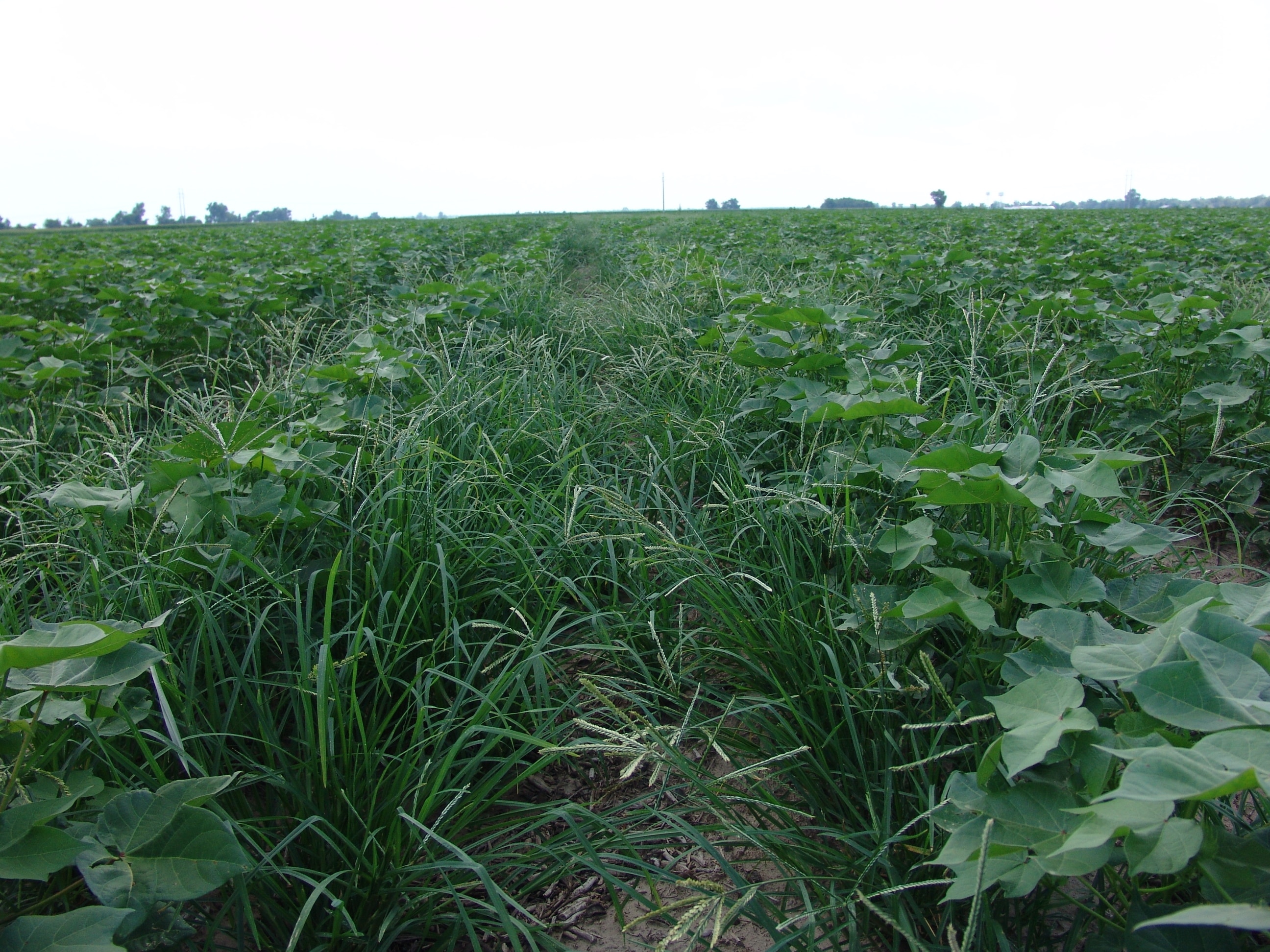
Cotton field with tall grass and broad leaves.

Monitor for Glyphosate-Resistant Goosegrass

Author:  Comments Off on Monitor for Glyphosate-Resistant Goosegrass
 
Cotton field with tall grass and broad leaves.
Glyphosate-Resistant Goosegrass after two 22 oz/A applications of Roundup PowerMax

Glyphosate-resistant (GR) goosegrass has shown up in a couple cotton fields in Lake and Dyer counties (picture left).  In these fields, repeated applications of glyphosate failed to control the goosegrass. Unfortunately, by the time the grower realizes that the grass is glyphosate resistant it has 4 or more tillers and is too large for even an application of Select Max or Fusilade to control.  Back in the late 1980s, Select Max or Fusilade did not control large goosegrass.  This appears to Continue reading →