JACKSON, Tenn. – The University of Tennessee Institute of Agriculture will host the annual Weed Tour on Wednesday, June 16 at the West Tennessee AgResearch and Education Center. The guided tour will feature 50 weed management research tests in corn, soybean and cotton as well as a demonstration of herbicide symptomology. Continue reading →
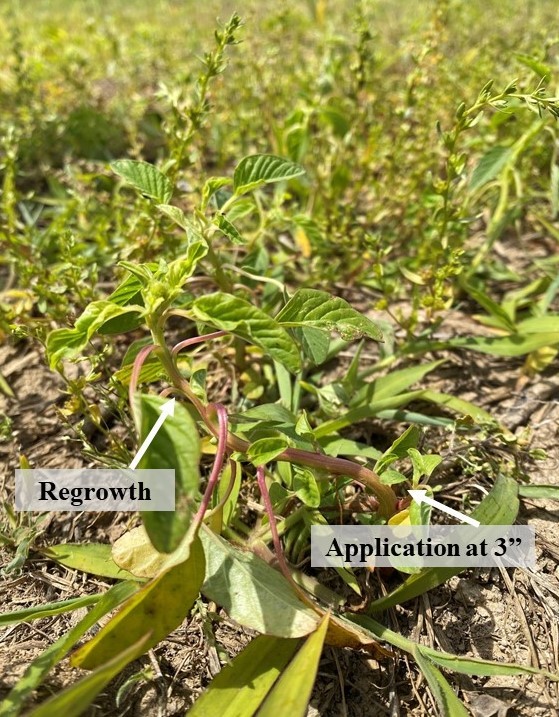
(Picture 1) Dicamba + glyphosate on 3″ Palmer 4 DAA
This picture (Picture 1) was taken just 4 days after a dicamba + glyphosate + clethodim application on 3” Palmer amaranth. Judging from some experience with this Palmer population, the growth after application would suggest it will likely survive. When we revisited the site indeed it had (Picture 2). Fields infested with similar Palmer populations are scattered about in a few counties in West and Middle TN. As such, there will be no substitute for first hand observation to determine if Palmer amaranth is recovering from a dicamba or Enlist application.
In our research more dicamba sensitive Palmer amaranth will often be dead or well on their way under good heat and moisture conditions in 7 days or so. Palmer that is showing regrowth from the apical meristem or lateral buds around 7 to 10 days after application often will live. Experience from last year would indicate that not only will they live but after a short pause will become quite competitive. Continue reading →
The UT Cotton Scout School is scheduled for the last Friday of the month, May 28st, at the West Tennessee Research and Education Center (605 Airways Blvd, Jackson). There is no fee, and preregistration is not required. Registration begins at 8:00 AM with the program starting at 8:30. Content will include classroom and hands-on training with an optional ‘go-to-the-field session’ after a box lunch. Topics covered will include cotton development and identification and symptoms of insect pests, plant diseases, and weeds.
Ryegrass in corn escapes glyphosate + dicamba burndown
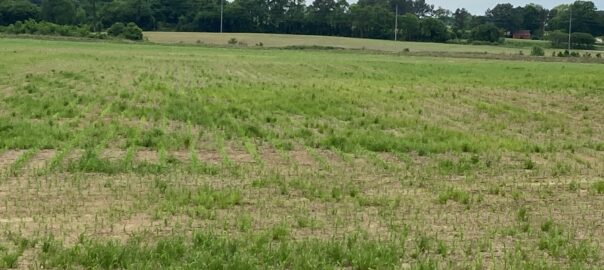
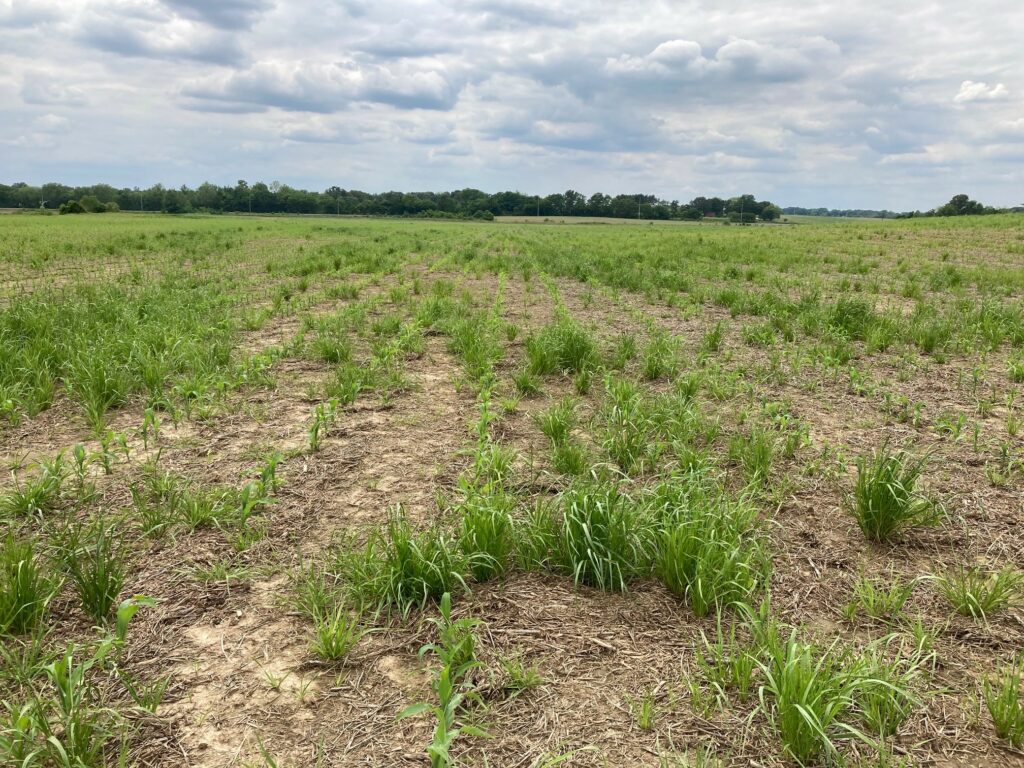
This has ,clearly, been the worst year for ryegrass in the state in both corn and wheat. There are a good many corn fields that are clean where the burndown was glyphosate + clethodim. Fields where dicamba was added in the burndown are, in most cases, the most infested with ryegrass. As mentioned in a previous blog, other than just going out and spraying the typical POST corn application and hoping that pushes the ryegrass on to maturity there is no real solution to controlling it. Continue reading →
JACKSON, Tenn. – The University of Tennessee Institute of Agriculture will host the annual Weed Tour on Wednesday, June 16 at the West Tennessee AgResearch and Education Center. The guided tour will feature 60 weed management research tests in corn, soybean and cotton as well as a demonstration of herbicide symptomology. Continue reading →
The call of the week is how to control ryegrass and, in a few other cases, fine fescue in emerged corn (Video of ryegrass and fescue in corn). Several have reported these grasses recovering from glyphosate + dicamba or in a few instances, glyphosate + rimsulfuron burndown. The questions that follow are why did they recover and what is the best way to control them now that the corn is up? Continue reading →
The UT Cotton Scout School is scheduled for the last Friday of the month, May 28st, at the West Tennessee Research and Education Center (605 Airways Blvd, Jackson). There is no fee, and preregistration is not required. Registration begins at 8:00 AM with the program starting at 8:30. Content will include classroom and hands-on training with an optional ‘go-to-the-field session’ after a box lunch. Topics covered will include cotton development and identification and symptoms of insect pests, plant diseases, and weeds.
Ryegrass appears to have escaped burndown in a number of fields that have been planted to corn. In most cases the ryegrass escaped a glyphosate plus dicamba burndown. Continue reading →