Insect pests are irritatingly unpredictable about when, where and how bad infestations will be. But there are patterns that repeat themselves annually. Continue reading


Insect pests are irritatingly unpredictable about when, where and how bad infestations will be. But there are patterns that repeat themselves annually. Continue reading
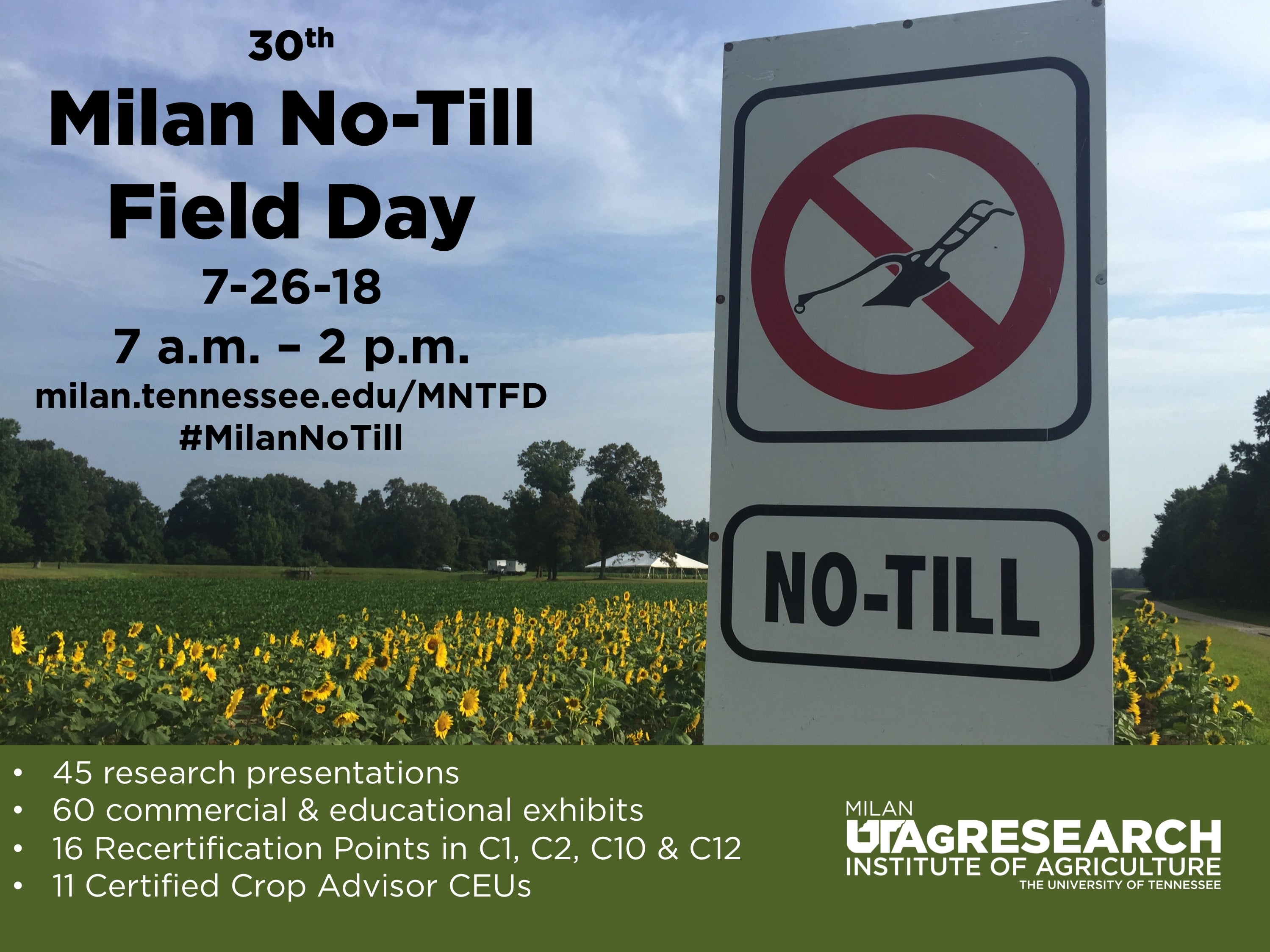
Visitors to the Milan No-Till Field Day can hear presentations on research involving corn, cotton and soybeans. Due to growing interest in cover crops, two tours (10 total presentations) will be devoted to that topic. New this year – a tour devoted to managing resistance, a tour on fragipans, and a producer-led panel discussing personal experiences with precision agriculture technology. Continue reading
STATES CROPS IN MOSTLY GOOD CONDITION
The State’s crops are in mostly good condition though rains have been spotty even within counties, causing top and sub-soil moistures to start decreasing. The tremendous amount of rain earlier in the season has helped with current soil moisture levels. Some tobacco is starting to be cut and pastures are in mostly good condition. There were 5.4 days suitable for field work. Topsoil was 5 percent very short, 21 percent short, and 69 percent adequate, and 5 percent surplus. Subsoil moisture was 5 percent very short, 20 percent short, 73 percent adequate, and 2 percent surplus. Continue reading at TN_07_23_18. The U.S. Crop Progress report can be read at CropProg-07-23-2018.
A year ago this week I posted a blog that was titled “I can not keep dicamba in the field”. At that time I, along with many applicators, was very frustrated by all the dicamba injury across West Tennessee. So what is the status of the dicamba injury in what is Year 3 for us? Continue reading
How often do temperature inversions occur in west Tennessee? Recent research funded by the United Soybean Board designed to study low level inversions has had some interesting results. Continue reading
Corn, soybeans, and wheat were up; cotton was down for the week.
Has a bottom been established in soybean and corn markets? The current low in the December corn contract is $3.50 ¼ established on July 12. The current low in the November soybean contract is $8.26 ¼ established on July 16. For corn, the supply and demand fundamentals paint a much more bullish picture than soybeans. For example, global corn stocks are projected down over 1.5 billion bushels year-over-year, while global soybean stocks are projected up 82 million bushels. Global demand for both commodities remains strong, however trade disputes continue to weigh heavily on agricultural commodities. Approximately 47% of US soybean production and 15% of corn production are exported annually, as such disruptions to global trade adversely affects soybean prices more than corn prices. At this point in time, a swift resolution to the trade war with China appears unlikely. Whether a bottom has been established in corn and soybeans will depend on further escalation of the trade war and how weather progresses between now and harvest. Currently, a stronger argument can be made for a bottom in the corn market than the soybean market. Continue reading at Tennessee Market Highlights.
Moth traps and field reports indicate the beginnings of the bollworm moth flight that could affect both cotton and soybean. Below are my suggestions on deciding if and when to make an insecticide application, and with which insecticides. Continue reading
SOME CROPS STARTING TO SHOW STRESS; HAY HARVESTED
Even though there were some scattered thundershowers across the State, mostly hot, dry weather across most of the State last week caused some crops to start showing signs of stress. Some showers are needed to help replenish soil moisture. The drier weather did, however, allow for active hay harvest. There were 5.6 days suitable for field work. Topsoil was 2 percent very short, 12 percent short, and 77 percent adequate, and 9 percent surplus. Subsoil moisture was 2 percent very short, 13 percent short, 79 percent adequate, and 6 percent surplus. Continue reading at TN_07_16_18. The U.S. Crop Progress report can be read at CropProg-07-16-2018.