The extended planting season this year has resulted in an extended weed management season. Even with this in mind it has been surprising about questions this late in August on what can be sprayed on soybean to control pigweed, morninglories and grass. Continue reading →
Serious infestations of goosegrass, junglerice and barnyardgrass have proven to be way too persistent in many cotton and soybean fields (Picture 1). Many are getting frustrated with the lack of control seen with tankmixes that contain glyphosate and/or clethodim or quizalofop. Some have asked if maybe some of these grasses have developed resistance to glyphosate, clethodim and quizalofop. Continue reading →
Picture 1. 3 foot tall goosegrass, fall panicum and Palmer amaranth that need to be burndown before soybean planting
The question of the week is on how to burndown fields that are grown up messes before planting soybeans (Picture 1). The problem is when fields are heavily infested with 3’ tall goosegrass, Palmer amaranth, horseweed and volunteer corn that is tasseling there are no good answers. Continue reading →
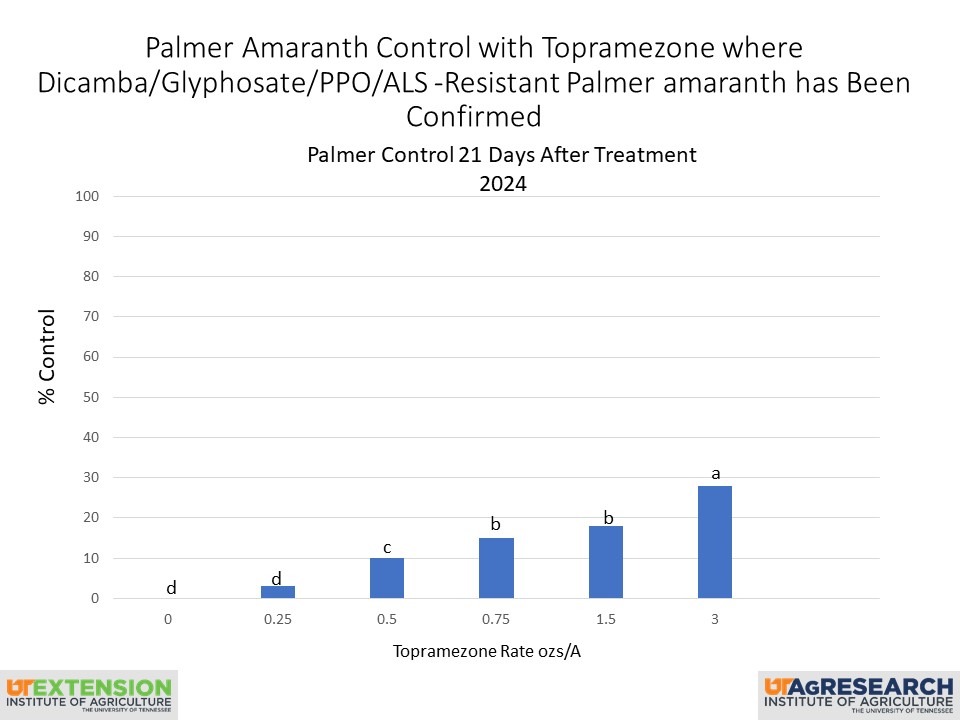
Last fall there was a notable amount of Palmer amaranth in many corn fields in areas of the state where we had confirmed dicamba resistance. As a result, we have recently conducted some field screens on these pigweed populations to herbicides used in corn and soybean.
Picture 1. Grass and Palmer amaranth escaping paraquat burndown in emerged cotton
There have been numerous fields where goosegrass, junglerice and Palmer amaranth were not controlled at burndown and the crop has emerged. In some cases, the wet weather delayed burndown to where Palmer amaranth and those grasses were too large to be effectively controlled with one pass of Gramoxone (Picture 1). In other cases, tillage used to help speed up field drying or to build beds partially buried pigweed and grasses which make effective burndown from Gramoxone very problematic (Picture 2). In a few cases, dicamba and glyphosate were used for burndown and they did not control those weeds due to resistance (Picture 3). Continue reading →
The call of the last week was Pre-emerge herbicide injury in soybeans. Several folks reported that their soybeans were “going backwards”. This is not a surprise as in wetter springs the probability of seeing injury from Pre-applied herbicides is greatly increased. That coupled with an increase in soybean acres this spring would increase the probability of herbicide injury in that crop. I would expect more of the same as we move into June with all the rain in the past few days.
Carryover injury from fomesafen (Flexstar, Prefix, Reflex, Intimidator, Marvel, Dawn, Rhythm, etc.) is starting to show in a few corn fields. This is because some applications in late June and July in 2023 coupled with a very dry fall allowed the herbicide to persist into winter. Recent rains then allow any herbicide carryover to more completely get into the soil solution.
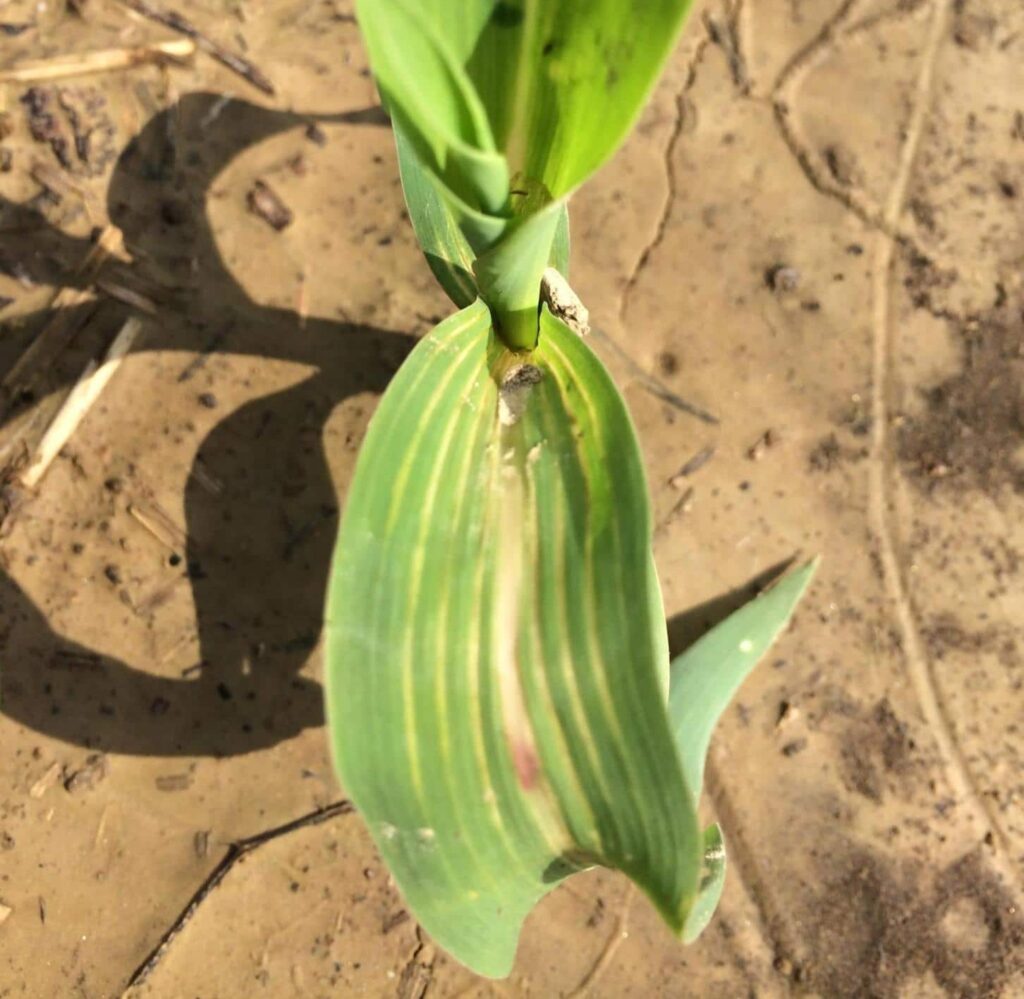
Fomesafen carryover injury in corn and grain sorghum looks similar. Expect to see stunting and interveinal chlorosis as pictures below sent from crop consultants clearly shows.
Striping of corn leaf veins characteristic of fomesafen carryover
Zidua (pyroxasulfone) applied via impregnated fertilizer in cotton has become popular in Tennessee. My understanding is that about 25% of the cotton acres last year had Zidua applied in this fashion. With the increasingly poor Palmer amaranth and grass control we are experiencing with dicamba + glyphosate, overlaying residual herbicides must be the foundation for weed control. Continue reading →