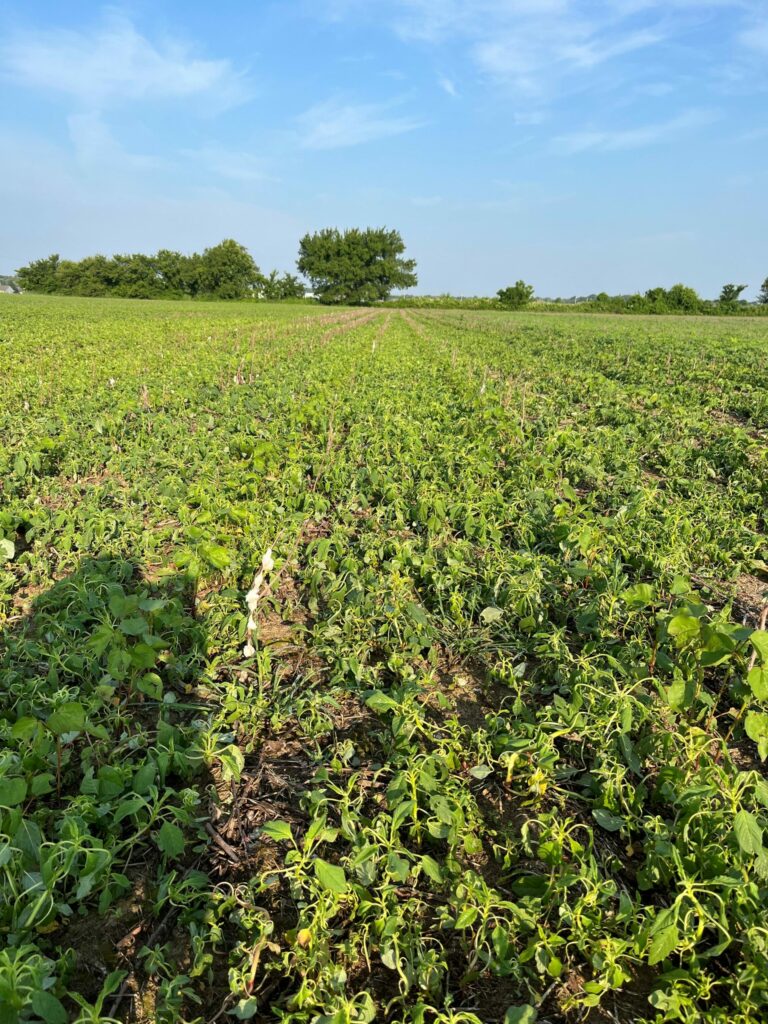
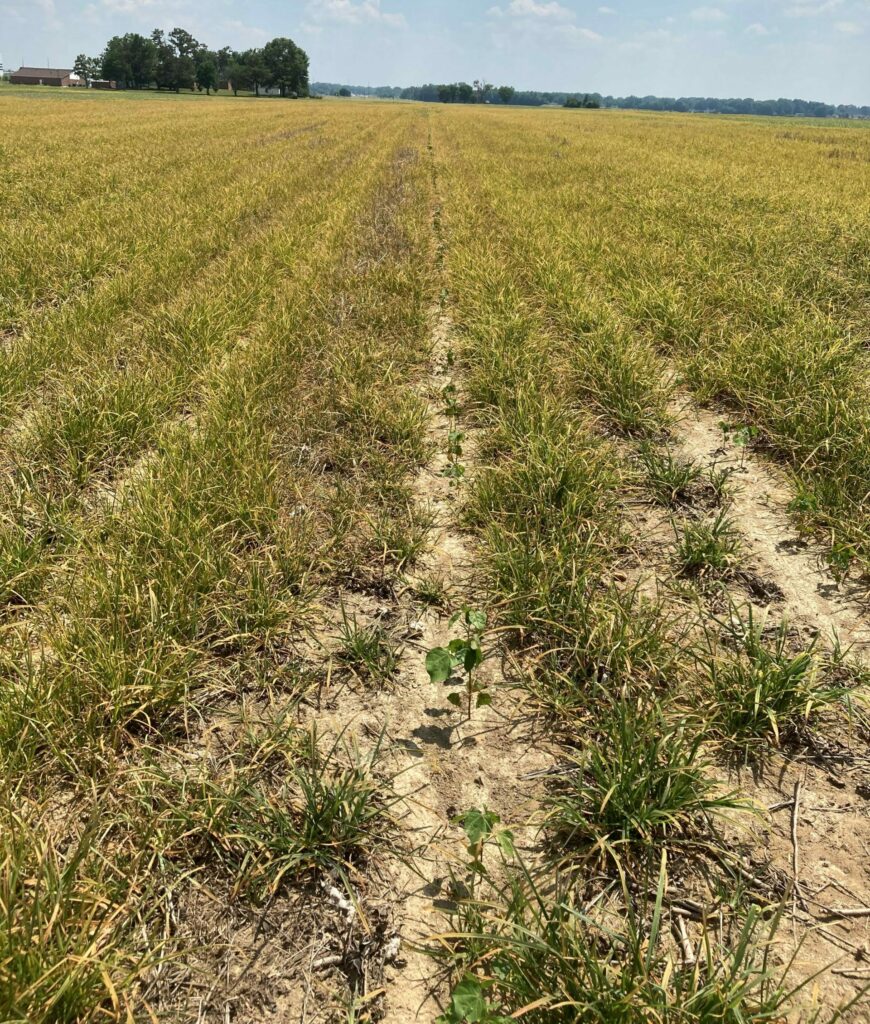
The two best fall-applied options for ryegrass and poa in wheat are Anthem Flex and Zidua. Pyroxasulfone is providing the grass control in both these herbicides. Anthem Flex can be applied as a true PRE right behind the press wheel. Keep in mind there is some chance of wheat injury from this new use pattern if a rain occurs shortly after planting. As such, if rain is in the forecast wait and apply it later as a delayed PRE or early POST. Continue reading →
Picutre 1. Dicamba pigweed escapes cleaned up in field with follow up Liberty application and a hooded diuron +MSMA application as well as cultivation
I have had the opportunity to visit fields where dicamba application/s failed to control Palmer amaranth and observe the success and failure of follow-up weed control tactics. On the positive side, where more timely and diverse weed control tactics were employed Palmer amaranth control was often a success. In a couple of cases, timely Liberty applications on Palmer amaranth escapes often provided 70 to 80% control. Follow-up hooded applications followed by cultivation increased Palmer control in these fields to greater than 95% (Picture 1). Continue reading →
UT’s Soybean Scout Schools will be held in July (see details below). These field-side programs cover the basics of soybean growth, scouting, pest identification, and general management. Three Pesticide recertification and CCA CEU points will be available. Scout Schools are offered free of charge with sponsorship from the Tennessee Soybean Promotion Board. Registration is not required. Participants will receive a scouting notebook and a sweep net while supplies last.
West TN – Madison County, July 17th, 9:00 AM – 11:30 AM. This school will be at the West TN Research and Education Center, 605 Airways Blvd. Jackson TN, 38301. Signs will be up at the station to direct you to the field.
Middle Tennessee Soybean Scout School
Middle TN – Coffee County, July 18th, 9:00 AM – 11:30 AM. This school will be at Graham Farms,8141 Woodbury Hwy., Manchester, TN. Please contact Amy Willis Prince of the UT Coffee County Extension Office at 931-723-5141 or awillis2@utk.edu if you plan to attend.
East Tennessee Soybean Scout School
East TN – Monroe County, July 19th, 9:00 AM – 11:30 AM. This school will be held at the Monroe County Farm Bureau Office 501 Main Street, Madisonville, TN 37354. Lunch will be provided. A head count is required for the meal, please contact Jonathan Rhea of the UT Monroe County Extension Office at 423-442-2433 or jrhea@utk.edu if you plan to attend.
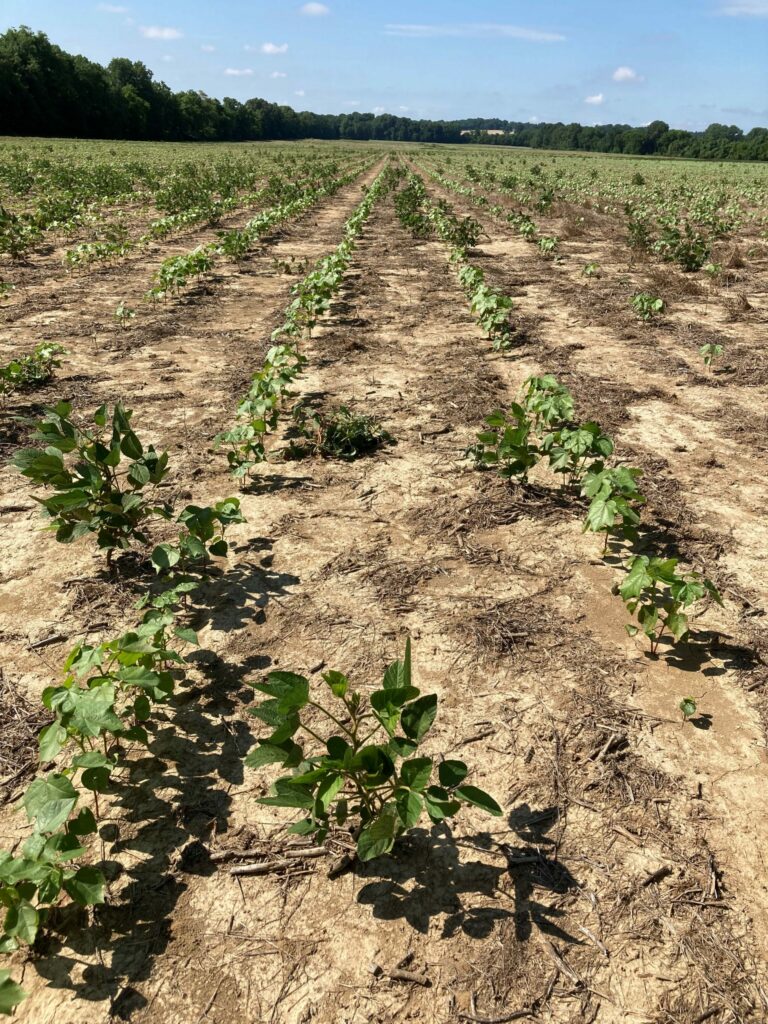
A recent new “weed” issue in XtendFlex cotton is volunteer XtendFlex soybean (Picture 1). Recent research has shown that Envoke at 0.125 to 0.15 ozs/acre provides very good control as soon as 7 days after application (Picture 2). Continue reading →
Picture 1. Palmer amaranth escapes after two dicamba applications.
Poor performance of dicamba on Palmer amaranth was again the theme of the last ten days. There have been numerous reports typically with attached pictures of large patches of Palmer amaranth recovering from dicamba application/s (Picture 1). Continue reading →
JACKSON, Tenn. – The University of Tennessee Institute of Agriculture will host the annual Weed Tour this Wednesday, June 21 at the West Tennessee AgResearch and Education Center. The guided tour will feature about 40 weed management research tests in cotton, corn and soybean. This tour will qualify for Commercial applicator 3 points in categories C01, C04, C10 and C12 as well as CCA 3 points for Crop Management.
Weed Tour runs from 9 – 12:00 a.m., with registration opening at 8:30 a.m. A light breakfast will be served. Continue reading →
Picture 1. 3 to 6″ Palmer amaranth escaping Engenia + glyphosate in XtendFlex cotton. Picture taken 12 days after application
Just when it appears that ryegrass has become our most problematic weed, Palmer amaranth goes into “hold my beer and watch this” mode. In the last 10 days we have fielded numerous reports on dicamba failures to control Palmer amaranth. Just this past week we were able to visit a number of these fields. Continue reading →
As the calendar turns to June weed management concerns change from ryegrass and horseweed to the summer annuals goosegrass, junglerice and Palmer amaranth.
Tennessee growers are in a real crunch time to control these three summer annual weeds. Big percentages of the corn, soybean and cotton crops all need some kind of POST application right now. The planter technology that can plant three different crops across large acreages very quickly has one drawback. The sprayers often cannot keep up to most every acre needing to be sprayed just as quickly. Continue reading →